
A salary increment letter is a formal letter dealing with a raise in an employee’s pay, written either by an employee requesting the increase or by an employer confirming one that has been approved. The two versions serve opposite purposes but share a similar formal structure. This guide covers both versions, when to use each, and what to include for an effective result.
What Is a Salary Increment Letter?
A salary increment letter is a formal letter that either requests or confirms an increase in an employee’s salary. An employee writes the request version to formally ask an employer to review their pay, citing performance and contributions. An employer writes the notification version to inform an employee that a salary increase has been approved, often after a performance appraisal.
| Type | Written By | Purpose |
|---|---|---|
| Salary Increment Request Letter | Employee | Ask the employer to review and increase current pay |
| Salary Increment Notification Letter | Employer | Confirm an approved pay increase and its effective date |
What Is the Difference Between a Salary Increment Letter and a Salary Revision Letter?
A salary increment letter notifies or requests a pay increase for one individual employee, based on their personal performance and contributions. A salary revision letter, by contrast, outlines changes to an organisation’s overall salary structure, potentially affecting multiple employees or positions at once. The two documents look similar but apply to different situations.
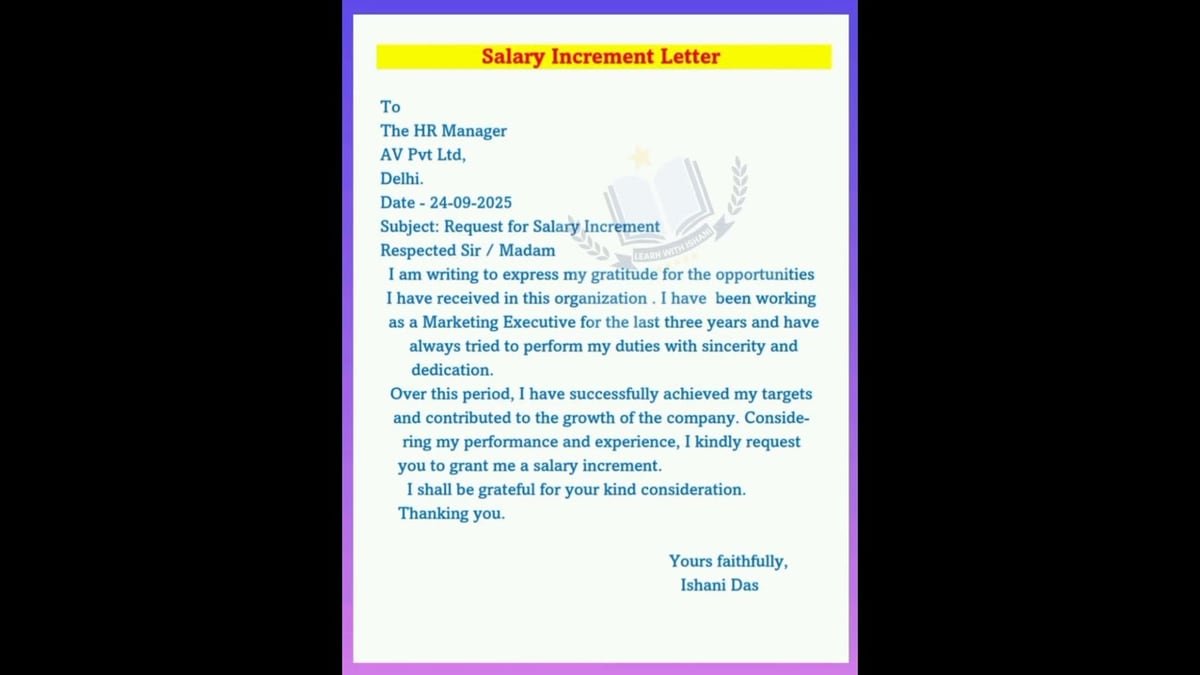
What Should a Salary Increment Request Letter Include?
A salary increment request letter includes six parts: sender details, date, recipient details, a subject line, a body outlining achievements, and a formal closing.
- Employee name, designation, department, and contact details.
- The date the letter is written.
- Recipient’s name, designation, and company address.
- A subject line stating the letter’s purpose, such as “Request for Salary Increment.”
- A body paragraph citing specific achievements, added responsibilities, and market salary data where relevant.
- A closing paragraph expressing willingness to discuss further, followed by a formal sign-off.
Sample opening: “I am writing to formally request a review of my current salary, based on my performance and contributions to [Company Name] over the past [duration].”
What Should a Salary Increment Notification Letter Include?
A salary increment notification letter includes the employee’s name and designation, their previous salary, the amount or percentage of increase, and the effective date of the new salary. Employers typically add a short paragraph appreciating the employee’s performance, since the letter also serves to reinforce morale.
Standard components:
- Employee name and designation.
- Previous salary figure.
- Amount or percentage of the increase.
- Date from which the new salary takes effect.
- A brief note appreciating the employee’s contribution.
Sample line: “We are pleased to inform you that your salary will increase by [percentage or amount], effective [date], in recognition of your consistent performance this year.”
When Should You Send a Salary Increment Letter?
Employers most commonly issue salary increment letters at four points: after an annual performance review, following successful completion of a major project, at the end of a probation period, or alongside a promotion. Employees typically send a request letter after demonstrating measurable achievements, taking on additional responsibilities, or confirming that their pay sits below the current market rate for their role.
What Mistakes Reduce the Effectiveness of a Salary Increment Letter?
Four mistakes commonly reduce the effectiveness of a salary increment letter.
- Requesting an increase without citing specific, measurable achievements.
- Omitting the exact salary figures or effective date in a notification letter.
- Using an overly informal tone in either version of the letter.
- Sending the request without first confirming the standard timing for salary reviews at the organisation.
Is a Salary Increment Letter Still Necessary in 2026?
A salary increment letter remains a standard part of formal workplace communication in 2026, whether requesting or confirming a pay increase. Employers continue to rely on the notification version to document pay changes for payroll and morale purposes, while employees use the request version to formally raise a pay review in writing rather than relying on an informal conversation alone. Keeping a written record benefits both sides, particularly where the employee later needs proof of updated salary for loans, visas, or other official purposes.
Be the first to comment